
"arabica defects"
2000 article(s) found

Coffee roasting distinguishes coffee raw beans from defective beans
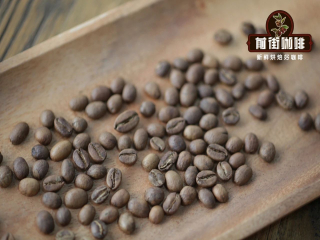
Beans with average shape, thickness, size, color, extension of the central line, etc., are the best. Washed Arabica raw coffee beans must be uniform and glossy in appearance, and should not be uneven or dull in color. The colors of raw beans are cyan, brown and other colors, and the color of beans represents water content. Cyan indicates moisture
The basics of coffee beans
Coffee belongs to the evergreen shrub of the genus Rubiaceae, which is centered in the tropics. There are about 6000 species of Rubiaceae belonging to 500 genera. Coffee has always been thought to have certain effects, such as strengthening the stomach, waking up the brain, stopping bleeding, dissipating heat, strengthening the body, and so on. The more famous Rubiaceae plant is Gardenia jasminoides, whose fruit was dried and used as medicinal material a long time ago.

Introduction to the parameters of shallow medium-deep baked beans by Lin Dong Manning selection of hand flushing equipment
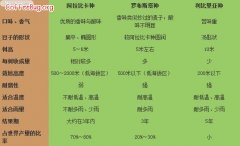
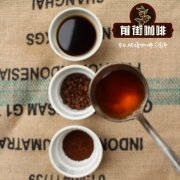
For more information on coffee beans, please follow the Coffee Workshop (Wechat official account cafe_style) Manning is produced in the mountains around Lake Lake Toba, a freshwater alpine lake located in the north of Medan, the provincial capital of Sumatra. The average height is about 900 meters above sea level. Mantning usually refers to planting in the mountains around Lake Toba.

The basic knowledge of coffee beans coffee three original species introduction
Coffee belongs to the evergreen shrubs of the genus Coffee of Rubiaceae, centered in tropical regions, with about 500 genera and 6000 species of Rubiaceae plants distributed here. Coffee has long been thought to have certain medicinal effects, such as invigorating stomach, refreshing mind, stopping bleeding, dissipating heat, strengthening body, etc. More famous Rubiaceae plants and gardenia, its fruit has long been dried as medicine

Colombia coffee defect rate standard What is Excelso grade standard Colombia coffee
Coffee in Colombia comes all the way from Venezuela. But in Colombia, the first place to grow coffee in large quantities was here in the province of Quincy, near this estate. Later, it moved to the coffee triangle near Medellin. At that time, a large number of rare trees, including wax palms, were cut down to plant coffee, which caused great damage to the environment. now he

What are the producing areas of mocha coffee? what are the flavor and taste characteristics of Ethiopian mocha coffee?
Professional coffee knowledge exchange more coffee bean information please pay attention to the coffee workshop (Wechat official account cafe_style) Ethiopian mocha coffee has a unique wild flavor and fresh aroma, coupled with glycol bitterness, rich and smooth taste, sweet fruit can also be found in the finish. Ethiopia, the birthplace of coffee, was also the birthplace of the Suoman dynasty. In

Coffee is classified like this. Explore the secret and classification of coffee bean names.
Professional coffee knowledge exchange More coffee bean information Please pay attention to coffee workshop (Weixin Official Accounts cafe_style) When buying coffee beans, in addition to seeing the name of coffee origin in the packaging or text introduction, sometimes you will see English and numbers, G1, G2, G3, AA, PB, SHB, SHG, HB, etc. Have you ever been confused about what these English or numbers represent? they
What are the common ways to handle raw coffee beans? What is the difference between solarization and washing? Coffee-producing country
Professional coffee knowledge exchange more information about coffee beans Please follow the common handling methods of raw coffee beans in the coffee workshop (Wechat official account cafe_style). What is the difference between solarization and washing? What is the grading system of raw beans in large coffee-producing countries? 1. Grading: after the seeds are taken out, the seeds are screened and graded, and Guatemala, Costa Rica and other countries are rated according to the planting height.

Exploring the secrets and classification of coffee bean names: how to distinguish the quality of coffee beans
Communication of professional baristas Please pay attention to the coffee shop (Wechat official account cafe_style) when buying coffee beans, you will sometimes see English and numbers, G1, G2, G3, AA, PB, SHB, SHG, HB, etc., in addition to the name of the coffee producing area in the packaging or in the text introduction. Have you ever wondered what these English or numbers represent? What's the difference between them?
Interpretation of Common questions about espresso: the quality of Coffee Raw beans
For newcomers, a common question: is the espresso beans used in Italian concentrate not as good as individual coffee? The coffee beans here actually mean raw coffee beans. a. The choice of raw beans TX knows something about coffee. At present, common coffee beans can be simply divided into three categories: Robusta, commercial Arabica, and boutique coffee. The choice of beans for espresso, according to the system

The name of coffee bean is regular. The origin of coffee bean name is classified by manor name.
Professional coffee knowledge exchange more coffee bean information Please pay attention to the coffee workshop (Wechat official account cafe_style) when buying coffee beans, in addition to the name of the coffee origin in the packaging or text introduction, sometimes you will see the English and numbers, G1, G2, G3, AA, PB, SHB, SHG, HB, etc., have you ever wondered what these English or numbers represent? he

Sumatra mantenin water powder ratio adjustment teaching Indonesian mantenin taste introduction
Professional coffee knowledge exchange More coffee bean information Please pay attention to coffee workshop (Weixin Official Accounts cafe_style) Front Street Coffee-Sumatra Mantenin Coffee Hand Brewing Indonesian coffee can be traced back to the 17th century, when the Dutch first introduced Arabica coffee seedlings to Ceylon (today's Sri Lanka)
What's the difference between G1 and G2 Yega Xuefei? Classification of coffee beans in Ethiopia
We know that coffee beans are usually graded according to the actual situation of the growing country, such as Kenyan coffee, altitude, blue mountain coffee, and coffee defect rate, such as Ethiopian coffee. Ethiopia, as the gene bank of Arabica, has a wide variety of coffee.

Sumatra Island Lindong Fine Coffee Bean Planting Conditions Location Climate Elevation Simple
Sumatra coffee is almost always semi-washed or sun-dried, with a large difference in quality and a very high percentage of defective beans. Asher Gold is processed by Volkopi processing plant located in Aceh area (Blue Batak is also the product processed by this processing plant), using pre-washing treatment, post-sun drying, or semi-washing method (may be mixed according to the situation), and after treatment.
Explanation of some Coffee terms (2)
Defective beans: defective coffee beans mixed with raw beans, including moldy beans, dead beans, black beans, immature beans, fermented beans and so on. If the defective beans are not hand-picked before and after baking, it will destroy the taste of the coffee. Colombian fresh and bright coffee: this is one of the four categories of coffee classified by the New York Futures Exchange according to the origin of coffee. It is Colombian, Kenyan and Tanzanian coffee.

A brief introduction to the planting Market Price of Fine Coffee Bean varieties in Lindong, Sumatra
Most Sumatran coffee is semi-washed or sun-treated, with a large quality gap and a high rate of defective beans. The gold of the Ass is treated by the Volkopi treatment plant located in the Aceh area (Blue Batak is also the product of the treatment plant), washed in the front, sun-dried in the latter, or semi-washed (which may be mixed according to the situation), and after treatment.
An introduction to the characteristics of the legends of coffee beans in Ethiopia
Ethiopia Ethiopia in 800 AD, the first Arabica coffee tree grew in Ethiopia's East African Rift Valley. More than 1200 years later, some of the world's unique and rare curry beans still originated in Ethiopia. There is a traditional Isopia proverb that goes like this: Buna dabo naw means: coffee is our bread. For Ethiopia, coffee

Is there a story about Sumatran coffee? how much is Sumatran coffee? how much is Sumatran coffee beans?
Professional coffee knowledge exchange more coffee bean information Please follow the coffee workshop (Wechat official account cafe_style) the source of Indonesian coffee mainly comes from Sumatra, Java and Sulawesi, among which Sumatra coffee beans are the most famous. Manning is also known as Sumatran Coffee, but Lake Tawa at the north end

A brief introduction to the planting situation of fine coffee beans in Lindong, Sumatra, geographical location, climate and altitude
Most Sumatran coffee is semi-washed or sun-treated, with a large quality gap and a high rate of defective beans. The gold of the Ass is treated by the Volkopi treatment plant located in the Aceh area (Blue Batak is also the product of the treatment plant), washed in the front, sun-dried in the latter, or semi-washed (which may be mixed according to the situation), and after treatment.

The main components of coffee astringency nutrition table introduction
The astringency of coffee is mainly due to the degradation of chlorogenic acid into decaffeoylquinic acid during roasting. In addition, a small amount of tartaric acid contained in coffee is also a source of astringency. The astringency in coffee is mainly due to the coagulation of dicaffeoylquinic acid with proteins in saliva in the mouth and in the mouth.